
Gral. Cepeda, Coah.-
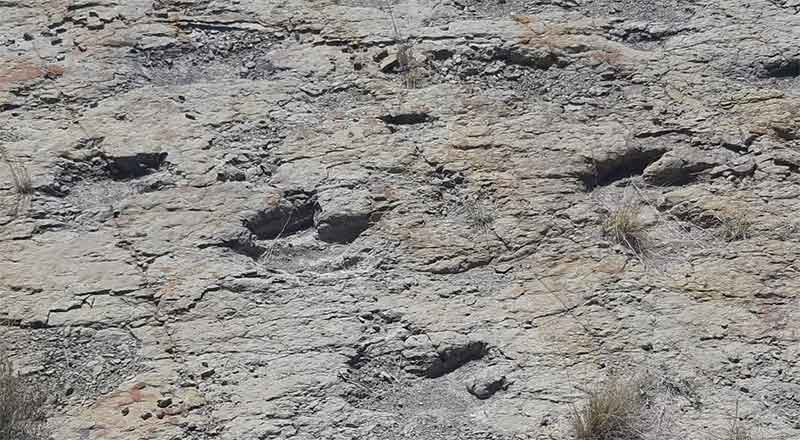
El sitio es de difícil acceso, se requiere de un guía para ir por un largo sendero de piedras, para después de cerca de hora y media de Saltillo, conocer las huellas que dejaron marcadas en el fango un grupo de dinosaurios pico de pato.
Son conocidos también como hadrosaurios, vivieron en la era del Cretácico tardío, y pasaron por ahí hace 72 millones de años.
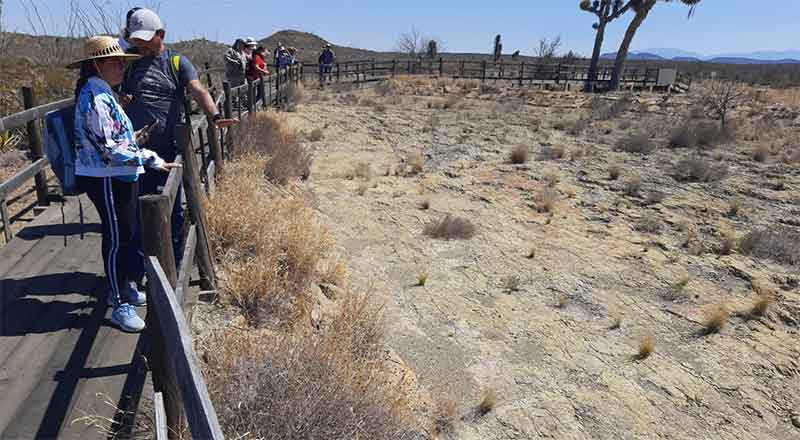
En total son 207 huellas, que se encuentran en un área de 351 metros cuadrados, antropólogos estiman que medían de 1.80 hasta 9 metros de largo. También hay de ornitomómidos, dinosaurios del tamaño de avestruces.
El lugar se conoce como “Las Águilas” y es patrimonio cultural de Coahuila y de México, fue descubierto en el 2001 por unos palentólogos que se dieron cuenta que hay rastros de pisadas de dinosaurios que pasaron por un terreno suave, explicó Gisela Carmona, investigadora de la UANL.
“Se supone que esto debía ser una fuente de agua o corrían arroyos muy caudalosos por aquí, entonces debieron haber bajado a tomar agua y al pasar por el sedimento fue lo que permitió que se conservaran las huellas”, dijo la autora de “Bibliografía de Fray Servando” y “Bestiario Alfonsino”.
En una visita reciente con un grupo de amigos, explicó que el lugar es de difícil acceso, pero que esto es parte de la aventura, para imaginar que se conocerá un espacio donde el tiempo marcó hace millones de años.
“Creo que debería conservarse así, sin tanta modernidad, dejándolo un tanto rústico pero bajo un buen cuidado, de gente de comunidades”, indicó.
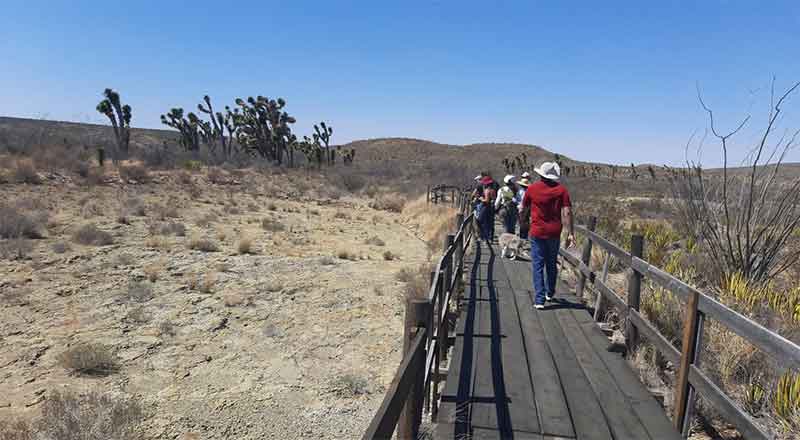
Lo valioso del sitio, es que si bien en el norte de México no se cuenta con una riqueza arqueológica, sí cuenta con restos de fósiles y huellas de dinosaurios que merecen ser estudiados y conocidos.
Carmona pidió a quienes visiten el lugar que lo cuiden, que pidan a los jóvenes no rayar las piedras o vandalizarlas, porque estos restos son parte de la cultura del país.
Quien colabora con la Secretaría de Extensión y Cultura de la UANL desde 1998, como investigadora, editora y actualmente es coordinadora de Planeación, recomendó conocer “Las Águilas”, donde están las que se consideran las huellas mejor conservadas de dinosaurios del país.
……
Following in the footsteps of the dinosaurs
By Jose Luis Montemayor
Gral. Cepeda, Coah.-
The site is difficult to access, a guide is required to follow a long path of stones, and after about an hour and a half from Saltillo, discover the footprints left in the mud by a group of duck-billed dinosaurs.
They are also known as hadrosaurs, they lived in the late Cretaceous era and passed through there 72 million years ago.
In total there are 207 footprints, which are found in an area of 351 square meters, anthropologists estimate that they measured from 1.80 to 9 meters long. There are also ornithomimids, dinosaurs the size of ostriches.
The place is known as “Las Águilas” and is a cultural heritage of Coahuila and Mexico, it was discovered in 2001 by paleontologists who realized that there are traces of dinosaur footprints that passed through soft ground, explained Gisela Carmona, a researcher from the UANL.
“It is assumed that this must have been a water source or very large streams ran through here, so they must have gone down to drink water, and passing through the sediment was what allowed the footprints to be preserved”, said the author of “Bibliography of Fray Servando” and “Bestiario Alfonsino”.
In a recent visit with a group of friends, she explained that the place is difficult to access, but that this is part of the adventure, to imagine that space will be known where time marked millions of years ago.
“I think it should be kept that way, without so much modernity, leaving it somewhat rustic but under good care, by people from the communities”, she said.
The value of the site is that although northern Mexico does not have an archaeological wealth, it does have fossil remains and dinosaur footprints that deserve to be studied and known.
Carmona asked those who visit the place to take care of it, to ask the young people not to scratch the stones or vandalize them because these remains are part of the country’s culture.
Who has collaborated with the Extension and Culture Secretariat of the UANL since 1998, as a researcher, and editor and is currently Planning Coordinator, recommended visiting “Las Águilas”, where what is considered the best-preserved dinosaur footprints in the country are located.